A Repository Uses Branch Protection—What Can Supplier-Risk Teams Actually Conclude?
Branch protection is a dated configuration fact, not proof of code review quality. Use five evidence layers to separate what a scan shows from what a supplier shipped.
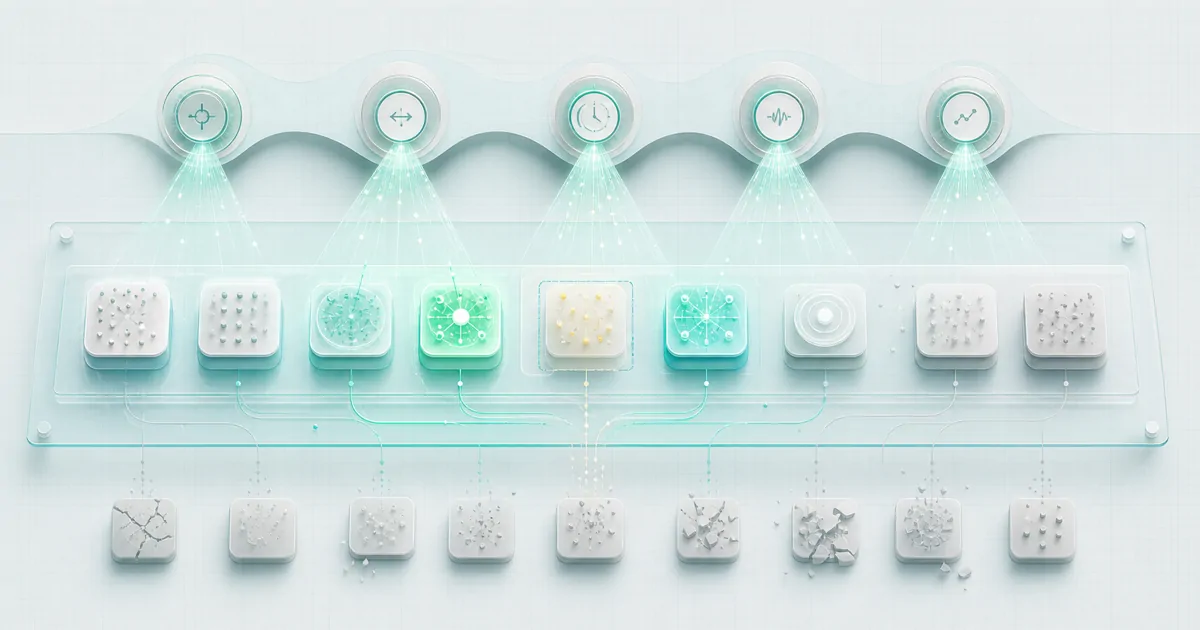
A repository that shows branch protection supports exactly one conclusion: on the scan date, that repository’s configuration required certain conditions before changes reached that branch. It does not prove that required reviews ran, bypass was impossible, the scanned settings were complete, or the supplier shipped that revision. For a software-supply-chain intelligence manager, separating “rules were configured” from “rules were enforced and the shipped product went through them” is the difference between fast-tracking a dependency and scheduling an audit.
A protected branch is a branch in GitHub whose rules can block deletion and force pushes and require conditions such as reviews or status checks before changes reach it (GitHub Docs, accessed 3 August 2026). A pull request is the change proposal reviewers approve or reject before merge; a rule requiring reviews means each pull request needs the configured number of approvals. A status check is a pass/fail signal from an external tool — typically a continuous-integration pipeline — that can be required before merge. The Open Source Security Foundation (OpenSSF) Scorecard is an automated tool that scores open-source repositories on security practices including branch protection. Each term marks a point where a visible setting and real behavior can diverge, and that divergence is what supplier-risk evidence must capture.
Key Facts: What the Official Sources Say
GitHub’s documentation (accessed 3 August 2026) says branch protection rules can control deletion and force pushes and require conditions such as reviews or status checks before changes reach a branch. Required reviews can specify reviewer counts, stale approvals can be dismissed, and bypass behavior can differ for administrators or custom roles. The page itself frames a visible rule as a configuration observation whose scope and bypass settings still need verification — the publisher separates the setting from its enforcement.
The OpenSSF Scorecard checks documentation (retrieved 3 August 2026) has 20 check sections and repeatedly warns that low scores on detection-based checks — CI-Tests, Dependency-Update-Tool, Fuzzing, Packaging and SAST among them — are not definitive indications of risk, because automated detection may miss valid practices. Its Maintained check awards the highest score for at least one commit per week over the previous 90 days and explicitly tells external users to consider software that normally needs less activity. Scores therefore describe what automation could detect on the retrieval date, not what the project actually does, and not what any buyer intends.
The current Branch-Protection check tiers: 3 of 10 for preventing force push and deletion, 6 of 10 once Tier 2 review conditions are met, 8 for a required status check, 9 for two reviewers and code-owner review, and 10 for stale-review dismissal and administrator inclusion. These are depth levels of a configuration measurement, not a product certification, and nothing in the ladder confirms that a human review occurred.
Five Evidence Layers for One Claim
A single observation feeds five separate questions. One table keeps a dated configuration fact from drifting into an enforcement claim.
| Layer | What it captures | What it still leaves open |
|---|---|---|
| Named branch and rule snapshot | Which branch is protected, the rule text, the scan date | Whether the rule was enforced in practice |
| Review and status-check requirements | Reviewer count, stale-approval dismissal, required status checks | Whether reviews ran and checks were genuine |
| Bypass and scanner-access limits | Who can bypass — administrators, custom roles — and the scanner’s access level | Whether production merges faced the same limits |
| Shipped revision | The exact revision or build the supplier delivered | Whether that revision passed through the protected flow |
| Accountable supplier decision | Who confirmed the facts and where the record lives | Whether the configuration will hold next quarter |
Why It Matters for Supplier Review
Which signals predict that a supplier’s product is safe to integrate is a larger question, covered in our guide on supplier qualification and product sourcing signals; the point here is that collapsing configuration into risk produces two predictable errors. First, a repository with strong rules but an independent release pipeline — the protected flow covers development while the artifact is built and signed elsewhere — receives a low-risk rating it has not earned. Second, a repository whose last release went through an emergency bypass is treated as safe because nobody asked which revision shipped. Both errors treat the dated configuration as proof of the shipped product; the five layers force “which revision, via which process, confirmed by whom” into the record.
The Strongest Counterargument and a Scanner-Access Limitation
The strongest counterargument is that branch protection is automated and public, so a high Scorecard score is enough signal on its own. The reply sits in the Scorecard documentation itself (retrieved 3 August 2026): low scores on detection-based checks are not definitive indications of risk because automated detection may miss valid practices. If a low score cannot prove risk, a high configuration score cannot prove safety — both measure what automation could see, not what happened. The score is also a snapshot: the Maintained check rewards activity over the previous 90 days, which tells you about cadence on the retrieval date, not about the revision you are onboarding.
The scanner-access limitation is the practical version of the same point. Most supplier scans run with a read-only token: it can see that a rule exists, but not the bypass list, administrator members, or audit-log events — the settings that decide whether the rule applied to the merge that produced the shipped revision. That is why “scanned access level” is layer 3 of the table, and why a low-privilege scan must be followed by a supplier-side confirmation of what it could not see.
Worked Example: A Composite Telegram Message
Consider a message a supplier’s maintainer might send in a private group. It is composite and illustrative — not a customer conversation, not evidence of any real supplier’s behavior:
Composite Telegram message (illustrative only): Supplier maintainer, private group channel, 14 July 2026: “Branch protection is on for main, so everything is reviewed before merge. The 2.4.1 build we sent you is safe to onboard — we can skip the extra audit.”
Run it through the five layers. Layer 1: “main” names a branch, but there is no rule text or snapshot date. Layer 2: no reviewer count, no status checks named. Layer 3: no bypass list — and a read-only scan could not have seen one. Layer 4: 2.4.1 is a label, not a revision; which commit SHA, built by which pipeline, with which results? Layer 5: the message came from a group channel, but no named person at the supplier has confirmed any of it in a record we can keep.
Telegram’s privacy context defines the observation boundary: the Telegram Privacy Policy (accessed 3 August 2026) describes bots as independent third-party services that may operate with or without message access and says third-party developers should ask permission before accessing data. An observation channel has an access mode, and the access mode limits what the observation can claim — the same discipline as the layers. For more on weighing channel-level signals, see our notes on Telegram signal provenance.
FAQ
Does branch protection prove that a supplier’s code reviews actually happened?
No. It proves the configuration required reviews on the scan date. Whether reviews ran, what the status checks said, who could bypass the rule, and which revision shipped must be verified separately with the supplier.
Is an OpenSSF Scorecard Branch-Protection score a certification of product quality?
No. It is a configuration measurement of automatically detectable settings. The Scorecard documentation itself warns that low detection scores do not prove risk, and the same logic runs the other way for high configuration scores.
What should I ask a supplier after seeing branch protection on their repository?
Ask for the branch name and rule snapshot, the reviewer and status-check requirements, the bypass list and the access level any scanner used, the exact shipped revision, and the person accountable for confirming all of it.
A Next Step Worth Taking
Pick one candidate dependency whose repository shows branch protection and fill in layer 1 and layer 5 before your next review: name the branch, date the snapshot, and write down who at the supplier will confirm the rest. One page of that shape separates what you know from what you are assuming and gives the supplier’s security team something concrete to answer. If Telegram groups are part of your signal collection, keep the same boundary: TOP Prospect processes only Telegram groups you intentionally connect and are authorized to access, produces candidates for review rather than fact certification, leaves the decision to a person, and does not contact group members automatically. See Telegram business signal intelligence for how that fits a review workflow — the five layers and the human sign-off remain the source of truth.
Frequently asked questions
Does branch protection prove that a supplier's code reviews actually happened?
No. It proves the configuration required reviews on the scan date. Whether reviews ran, what the status checks said, who could bypass the rule, and which revision shipped must be verified separately with the supplier.
Is an OpenSSF Scorecard Branch-Protection score a certification of product quality?
No. It is a configuration measurement of automatically detectable settings. The Scorecard documentation itself warns that low detection scores do not prove risk, and the same logic runs the other way for high configuration scores.
What should I ask a supplier after seeing branch protection on their repository?
Ask for the branch name and rule snapshot, the reviewer and status-check requirements, the bypass list and the access level any scanner used, the exact shipped revision, and the person accountable for confirming all of it.