"We Need an Authorised CBAM Declarant"—Is This Ready for a Sales Call?
A Telegram post that asks for an authorised CBAM declarant is a lead, not a quote. Collect five bounded facts—goods, annual mass, importer establishment, role and application state—before routing it to a sales call, specialist handoff or watch list.
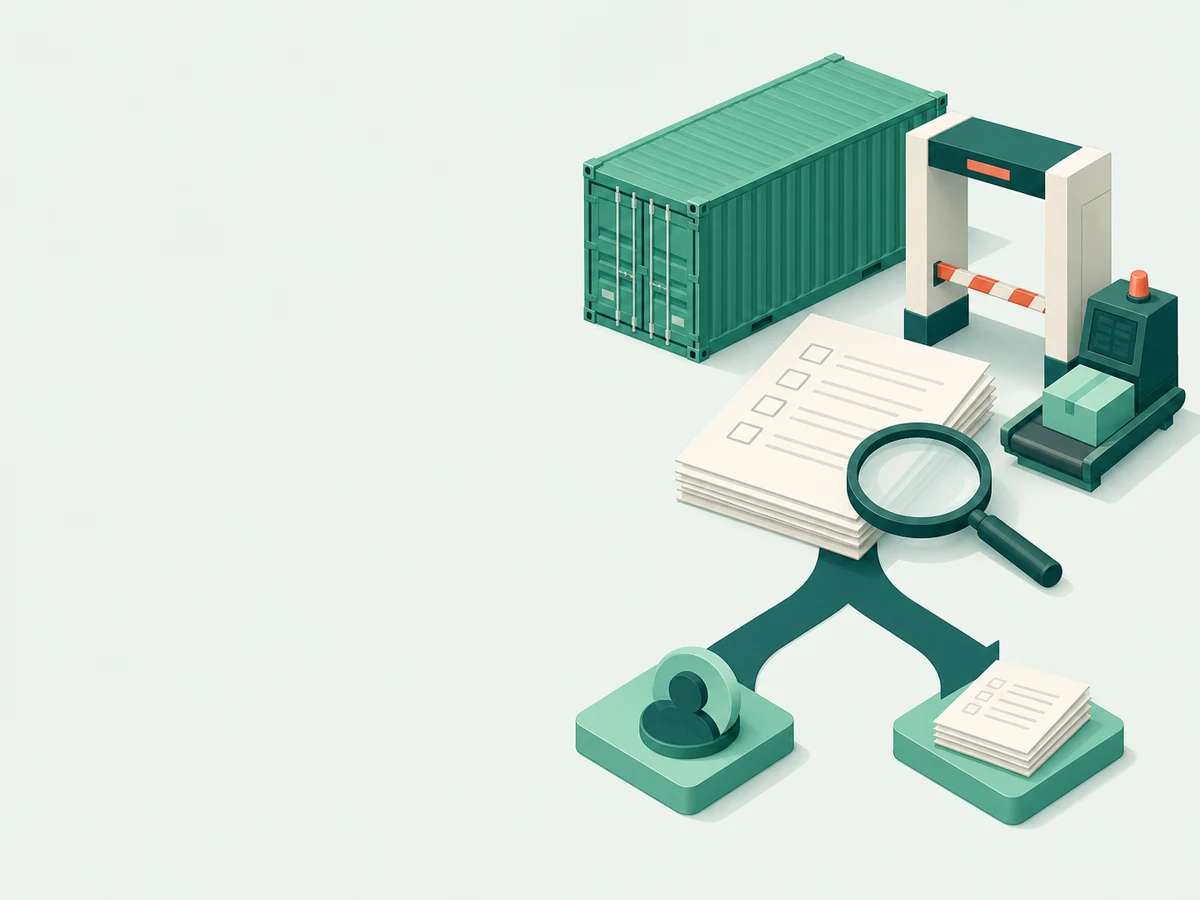
Not yet—and closing that gap is the job of your first reply. A Telegram post that names the destination (“an authorised CBAM declarant”) but none of the route—goods, annual mass, importer establishment, representative role, application state—is a lead worth one structured follow-up, not a quote. Collect those five bounded facts first, then route the request to a sales call, a specialist handoff, or a watch list, and leave customs interpretation with the importer and its advisers.
Two plain-language definitions carry the framing. The Carbon Border Adjustment Mechanism (CBAM) is the EU tool that addresses carbon leakage by reflecting embedded emissions in import prices, as the European Commission states on its CBAM overview page (accessed 2 August 2026). An authorised CBAM declarant is the status an EU importer—or an indirect customs representative acting for one—must hold to submit CBAM declarations for goods above the 50-tonne threshold, per the Commission’s CBAM definitive regime page (accessed 2 August 2026). For a business-development lead in carbon-accounting services, both definitions outline the work you might sell: goods define the data scope, tonnage decides whether the obligation exists, and the application state sets the urgency.
The five facts to collect before a sales call
Each fact is bounded—a name, a number, a country, a role, a status—so a reply fits in one short message.
1. Covered goods
Which goods, exactly? The Commission’s overview page (accessed 2 August 2026) lists cement, iron and steel, aluminium, fertilisers, electricity and hydrogen among the covered sectors—the answer defines the data scope and whether the goods are inside the mechanism.
2. Annual mass
How many tonnes per year? The Commission’s definitive regime page (accessed 2 August 2026) puts the trigger at a single mass-based threshold: importers of more than 50 tonnes of CBAM goods must apply for authorised declarant status. Ask for the figure and the unit—tonnes, not pallets or containers.
3. Importer establishment
In which EU country is the importer established? The Commission says access to the CBAM registry is requested through the national competent authority—the official body in each EU country that handles CBAM registration—of the country where the importer is established (definitive regime page, accessed 2 August 2026). The country decides which authority and which forms.
4. Declarant or representative role
Is the requester the importer, or an indirect customs representative acting for importers? The status attaches to the entity that declares, so the answer changes who the engagement is with: one importer, or several behind a representative. Ask directly: “Are you the importer, or do you act for importers?”
5. Registry application state
Has the application started? Three buckets cover it: not started, in progress with the national competent authority, or granted. Whether a company has begun is a fact only it knows. Do not infer it from the calendar—the definitive regime began on 1 January 2026 (overview page, accessed 2 August 2026), and not every importer has applied.
Key facts: what the official sources say
- The transitional phase ran from 2023 to 2025; the definitive regime applies from 1 January 2026. European Commission, CBAM overview page (accessed 2 August 2026).
- Covered sectors include cement, iron and steel, aluminium, fertilisers, electricity and hydrogen. European Commission, CBAM overview page (accessed 2 August 2026).
- EU importers or indirect customs representatives importing more than 50 tonnes of CBAM goods must apply for authorised CBAM declarant status. European Commission, CBAM definitive regime page (accessed 2 August 2026).
- Registry access is requested through the national competent authority of the EU country where the importer is established. European Commission, CBAM definitive regime page (accessed 2 August 2026).
- Telegram describes bots as independent third-party services whose permissions can be altered or revoked; developers should ask permission before accessing data. Telegram Privacy Policy (accessed 2 August 2026).
Two readings belong here. The 50-tonne threshold is mass-based, not value-based—that is the measurement context. The dates are a legal calendar, not a buyer-intent meter: a post from spring 2026 is not automatically more urgent than one from December 2025. Use the dates to understand the regulatory setting; use the five facts to understand the person.
Why this matters for a sales pipeline
Three failure modes justify the method. First, quoting without scope: a price for “CBAM declarant services” is meaningless until you know goods and tonnage, which can differ by an order of magnitude in data volume. Second, mistaking a deadline for demand: treating 1 January 2026 as proof that a poster is ready to buy produces confident calls that go nowhere. Third, overstepping the role: when tonnage comes back below the threshold, note that the obligation may not apply and let the importer’s customs adviser confirm it—“watch list” is a sales decision, not a customs ruling.
There is also a sourcing boundary. When you collect such requests from Telegram groups you are reading third-party messages; per Telegram’s Privacy Policy (accessed 2 August 2026), bots are independent services whose permissions can be altered or revoked. Treat every post as a candidate, verify facts with the writer, and do not assume a group’s openness is permanent. For the broader discipline of turning posts into conversations, our notes on Telegram acquisition leads cover the follow-up side of this loop. And a single message is a candidate, not a fact—the same reading we use when supplier-qualification and product-sourcing signals appear in group posts.
Worked example: from post to route
Illustrative composite Telegram post (not a customer message) “Hi everyone, we need an authorised CBAM declarant for our imports. Please DM if you can help—we’d like pricing.” Posted in a trade group; no goods, tonnage, country, role or application status included.
The first reply asks five short, neutral questions:
- Which goods do you import—which CBAM sectors?
- Roughly how many tonnes per year?
- In which EU country is the importer established?
- Are you the importer, or do you act for importers?
- Have you started an application with the national competent authority?
Then route on the answers. The responses below are illustrative and composite, not customer data.
- Steel, about 3,200 tonnes a year, importer based in Germany, we are the importer, no application yet. → Sales call. It names covered goods, sits far above the 50-tonne threshold, fixes establishment and role, and leaves a timeline worth discussing. Re-confirm the numbers on the call.
- “We import some things, a few shipments a year.” → Watch list for two weeks, then a light follow-up. There is a plausible need but no scope; a call now would be a guess.
- “Packaging materials, not sure about tonnes, based in Poland.” → Specialist handoff or watch list. Packaging is not among the sectors listed on the Commission’s overview page (accessed 2 August 2026), but whether the goods fall under CBAM is the importer’s question to settle with its customs adviser; your decision is simply that no scopeable declarant engagement exists yet.
What remains unknown in every branch: tonnage and status are self-reported until the importer shows something official; threshold applicability is for the importer and its advisers to confirm. You verify facts on the call; you do not certify them from a post.
When the method is done, the pipeline question is where such posts come from. For that part we use TOP Prospect, a Telegram business-signal intelligence product: it processes only Telegram groups you intentionally connect and are authorized to access, produces candidates for your review rather than fact certification, leaves the decision to a person, and does not contact group members automatically. The tool helps surface the posts; the five-fact method decides what they are worth.
FAQ
What is the difference between an authorised CBAM declarant and a regular EU importer?
The Commission’s definitive regime page (accessed 2 August 2026) states that EU importers, or indirect customs representatives, importing more than 50 tonnes of CBAM goods must apply for authorised declarant status. Below that threshold the obligation does not attach in the same way—how it applies to a specific importer is for the importer and its customs adviser to confirm.
How can I tell whether a company has already applied for authorised declarant status?
You cannot tell from a Telegram post. The application state is a fact only the company knows until the authority confirms it; ask the poster directly and treat the answer as self-reported until you verify it on a call.
Should I send pricing when someone asks for an authorised CBAM declarant?
Not before the five facts. Without goods and tonnage, a price is a guess—and a guess presented as a quote erodes trust in the first exchange. Quote only against a defined scope.
Your next step
Next time a group post asks for an authorised CBAM declarant, reply with the five questions—even if the poster only answers two. Note the route you chose and check back in a week; the posts that answer all five earn a calendar invite.
Frequently asked questions
What is the difference between an authorised CBAM declarant and a regular EU importer?
The Commission's definitive regime page (accessed 2 August 2026) states that EU importers, or indirect customs representatives, importing more than 50 tonnes of CBAM goods must apply for authorised declarant status. Below that threshold the obligation does not attach in the same way—how it applies to a specific importer is for the importer and its customs adviser to confirm.
How can I tell whether a company has already applied for authorised declarant status?
You cannot tell from a Telegram post. The application state is a fact only the company knows until the authority confirms it; ask the poster directly and treat the answer as self-reported until you verify it on a call.
Should I send pricing when someone asks for an authorised CBAM declarant?
Not before the five facts. Without goods and tonnage, a price is a guess—and a guess presented as a quote erodes trust in the first exchange. Quote only against a defined scope.