An IoT Tracker “Supports SGP.32”: Which Official Source Can Prove Each Part?
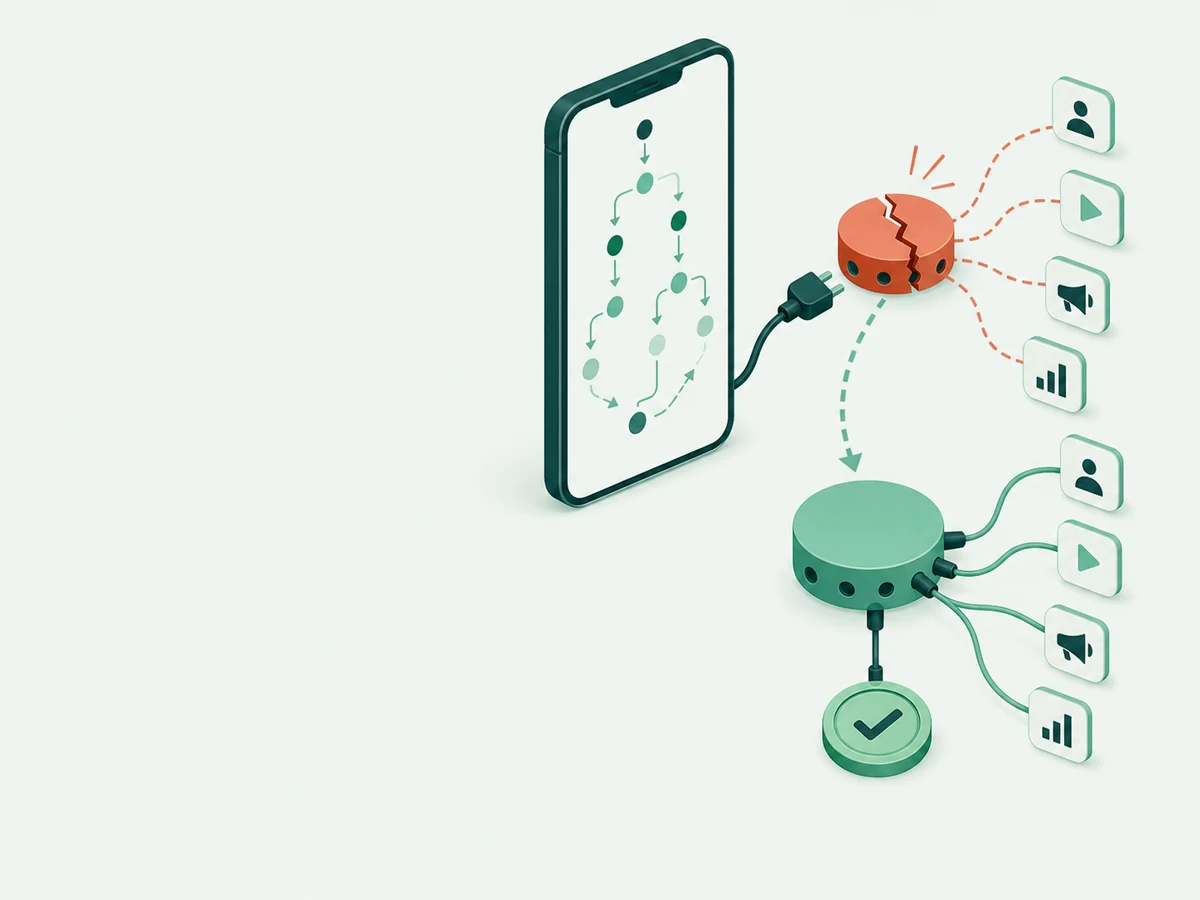
GSMA defines the architecture, the exact-model record describes device implementation, and the operator record establishes service availability. None can replace the other two.

Signals to watch
- The GSMA record confirms specification scope and version, not implementation
- The exact-model page and release notes confirm what the device and firmware expose
- The operator service and account record confirm market, offer and entitlement
An IoT eSIM compatibility claim has three evidence owners. GSMA can establish what SGP.31 or SGP.32 specifies. The exact device vendor can establish what one hardware and firmware combination implements. The operator or connectivity provider can establish where a service is offered and whether an account may use it. No single page can prove all three.
This page is for the telecom intelligence analyst watching authorized device, operator and connectivity Telegram groups. The desired Signal is a compatibility or launch claim that could change a sales brief. If the analyst checks it a day late, an obsolete or over-broad statement may already have reached a customer conversation.
Start with one disputed sentence
Use this illustrative composite claim, not a real vendor or customer statement:
“nRF9151 tracker can switch to KDDI/SORACOM profiles under SGP.32 now.”
It looks like one fact. It actually contains at least five:
- SGP.32 covers the intended remote-profile operation;
- the tracker contains a compatible eUICC implementation;
- the nRF9151 hardware and firmware expose what that implementation needs;
- KDDI/SORACOM offers the relevant service in the intended market; and
- the customer account and contract allow the operation now.
The correct research result may be “partly supported, not yet verified.” That is more useful than forcing a yes or no from the first official-looking page.
GSMA owns the architecture and specification version
GSMA published SGP.31 v1.2 on 29 April 2024 as the eSIM IoT architecture and requirements for constrained IoT devices. It published the related SGP.32 v1.2 technical specification on 27 June 2024.
These records can answer questions such as:
- Which architecture and roles does this specification family describe?
- Which version is the claim referring to?
- Is the claimed kind of remote provisioning or management inside that specification’s scope?
They cannot prove that a named tracker implements the specification, that an operator accepts it, that a service is commercially available in one country or that an account is entitled to use it. A standard is not a device certificate or a service order.
The version number is part of the evidence. A message that says only “SGP.32” may refer to an older integration plan, a current document or a provider’s shorthand. Record the exact version named by the source and the date of the vendor or operator page. Do not silently replace the poster’s version with the newest one and then claim the original statement has been verified.
The exact-model record owns device implementation
The next stop is not a generic “IoT modem” page. It is the exact tracker, module, eUICC and firmware record.
Nordic Semiconductor’s current nRF9151 product page lists LTE-M, NB-IoT, NB-NTN and nuSIM capabilities, and its feature table explicitly marks SGP.02, SGP.22 and SGP.32 as supported. That is a module-vendor claim, but the table does not name an SGP.32 document version or establish a finished tracker’s eUICC and firmware integration.
LTE-M and NB-IoT are cellular access technologies. nuSIM is a different SIM implementation approach. Neither label, by itself, establishes an SGP.32 eUICC architecture in a finished tracker.
The analyst should look for the tracker SKU, module revision, eUICC component, firmware release notes, vendor integration guide and any stated certification or operator test. If the vendor does not publish the needed assertion, status remains unknown; silence is not proof of incompatibility either.
The operator record owns offer and account availability
KDDI’s official notice, originally issued on 1 July and updated on 24 July 2026, says KDDI and SORACOM jointly developed an SGP.32-compatible IoT SIM. It gives separate schedules: SORACOM’s service began on 7 July 2026, while KDDI’s is planned for the second half of fiscal 2026. That can establish a named announcement and the schedules stated in that notice.
It does not automatically establish global availability, compatibility with the illustrative tracker, access for every existing account or completion of a customer’s tests. A launch notice and a logged-in account record answer different questions.
For a usable sales brief, the analyst still needs the current service page or contract attachment for the target country, the accepted implementation and device requirements, any onboarding or test step, and the account’s entitlement. If only the announcement is public, report the announcement and the remaining account gap separately.
One claim, three source owners
| Claim inside the message | Best official source | It can establish | It cannot establish alone |
|---|---|---|---|
| “under SGP.32” | GSMA SGP.31/32 record | Architecture, scope and version | Device implementation or service availability |
| “nRF9151 tracker can” | Exact tracker/module documentation and release notes | Named hardware, firmware and stated implementation | Operator acceptance or account rights |
| “KDDI/SORACOM profiles” | Current operator/service documentation | Named offer, markets and published requirements | Compatibility with an undocumented device build |
| “now” | Account portal, order record or contract attachment | Current entitlement for that account | Universal customer availability |
The table is not a ranking. It is an ownership map. Each source is strongest only for the fact it controls.
Screenshots need the same treatment. A portal screenshot may show that an option appeared for one logged-in user at one moment, but it can hide the account, country, service tier, feature flag and page date. Recover the official page or account record, preserve the screenshot only as the origin of the claim, and note when the current record cannot be shared publicly. An image of a dropdown is not a universal availability statement.
Write the result without overclaiming
For the illustrative sentence above, a defensible note would read:
GSMA records establish the SGP.31/32 IoT architecture and cited versions. Nordic’s public nRF9151 page claims module support for SGP.32 but does not identify the specification version in that feature table or prove a finished tracker integration. KDDI has announced a jointly developed SGP.32-compatible IoT SIM with separate SORACOM and KDDI schedules. The finished tracker’s eUICC and firmware integration, target market, operator acceptance, service terms and account entitlement remain unverified.
That note gives sales something precise to use. It also identifies the next document instead of replacing missing facts with confidence language.
TOP Prospect can surface and group such claims from Telegram sources the user intentionally connected, preserve their original wording, source and time, and place them in a human review queue. It cannot inspect device firmware, enter an operator portal, certify compatibility, change profiles or contact the poster.
First separate a commercial request with the IoT eSIM qualification article. Use the official-source ladder when a screenshot or reseller summary hides the evidence owner, and retain the original claim through Signal provenance.
Frequently asked questions
Does SGP.32 compliance prove that a specific tracker works with an operator today?
No. The GSMA specification describes an IoT eSIM architecture and technical behavior. Exact-device implementation, firmware, certification, operator acceptance, market availability and account rights require separate official records.
Can LTE-M, NB-IoT or nuSIM support prove SGP.32 support?
No. Those labels describe other parts of connectivity or SIM implementation. Unless the exact device vendor explicitly documents the relevant SGP.32 implementation and version, the claim remains unverified.
Does an operator launch notice mean every existing account can use the service?
No. A notice can establish that a named offer exists or is being introduced. Countries, eligible devices, commercial terms, testing, migration and account entitlements still belong to current service and account records.
What should remain unknown after checking public eSIM sources?
Unless exact records say otherwise, the finished-device implementation, firmware, target-market acceptance, commercial terms, testing and account entitlement remain unknown and need confirmation from their responsible owners.